
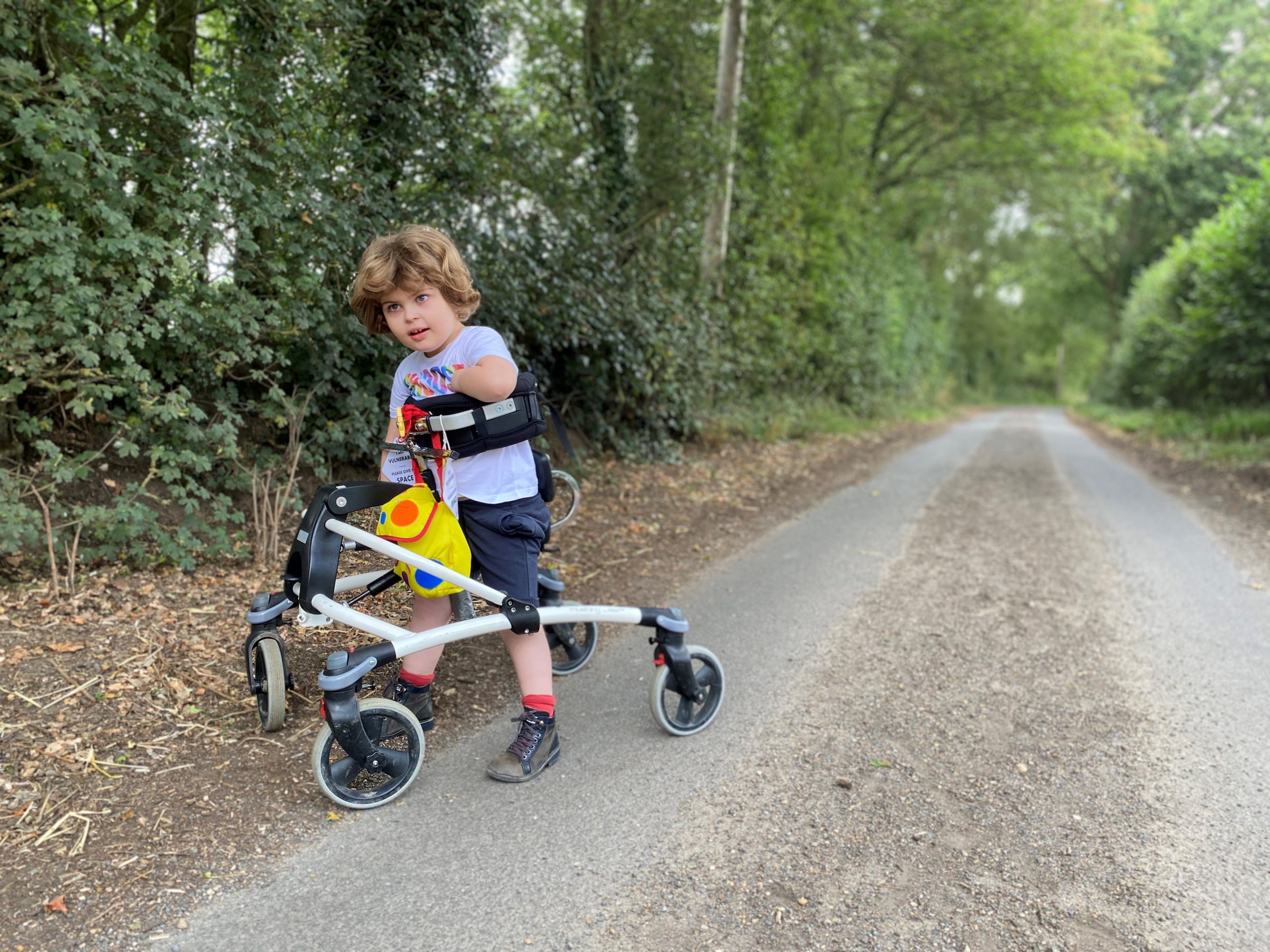
Does he talk? Does he walk? What’s that tube? Why can’t he eat? Look at that boy, I feel really sorry for him. What’s wrong with him?
These are only a few of the things I have been asked or had to overhear when I’ve been out with Freddie. In particular they are examples of when people say things out loud. It’s actually the staring, tutting, the head tilt (which let’s you know somebody feels sorry for you) or being watched when you pull up to a disabled parking bay that happen much more frequently.
I was asked recently if I would be happy to share my experience of how Freddie is received in public. It’s something I have touched on before – both the good and the bad. It’s also something which has evolved and changed depending on Freddie’s age, what his health has been like, along with my mental health (which has varied at different parts of our journey). Understandably as he ages the gap between him and what is ‘normal’ for his age becomes bigger, therefore year on year the differences become more obvious.
I don’t believe anybody sets out to be hurtful, but it does hurt. Particularly at first when I wasn’t used to it. In my experience you also receive more attention with something more physical or medicalised. Such as when Freddie had the nasal-gastro tube or the fact that he can’t walk which has become more apparent by the equipment he uses. At one point his wheelchair looked like a buggy and people weren’t sure of his age so things were a little ambiguous. Therefore it didn’t draw so much attention.
I remember the nasal gastric tube bringing an influx of unwanted attention wherever we went. I also know it made me become quite defensive. Pre-empting the responses we would get during an outing would make me stressed and anxious before we’d even left the house. In hindsight I was trying to juggle a deterioration in his health and condition alongside learning a new way to care for him but also having to deal with people openly staring at us or making it clear they felt sorry for us. Which isn’t what I wanted, I just wanted us to blend in. In fact, never have I wanted to us to be more invisible yet that was the time we were watched the most. It’s not surprising I was defensive and I struggled to go out. In fact we spent a lot of time at our hospice initially to try and avoid the outside world and their eyes.
I found the attention difficult to navigate at first. There have been times I’ve opted to stay at home with Freddie because my confidence has been low and I didn’t think I would be able to deal with the outside world looking at us on that particular day, let alone answering questions. Primarily because every look reminds me that my child is different and some days I don’t need or want reminding of that. Some days I just want us to be normal. I know our situation. Sadly, I know only too well how different our life is from the majority but I am so unbelievably proud of Freddie and all he’s achieved. He’s amazing. I want people to see that. To see how happy and cheeky he is instead of everything they think he isn’t. Which is how he naturally gets categorised at first. We, as people, generally seem to notice differences before similarities. Our children are a diagnosis to the outside world before they are a child. Someone will walk over and ask ‘what’s wrong with him?’ before they would think to ask ‘what’s his name?’ for example.
With that said, we have had some beautiful moments too. Sometimes they may start out with one of the comments I mentioned initially but end up being a really positive conversation. Perhaps they just wanted an excuse to start talking and meet Freddie but didn’t know how to start the conversation. Maybe they actually wanted to learn a little more or were just trying to be friendly. The truth of the matter is that I’m Freddie’s biggest fan and if you show an interest I will bore you to tears talking about him most days. The other side of that is that I can also talk about his condition and diagnosis in quite a detached way which has made people cry before now. Then you’re in the situation where you’re trying to comfort someone else about your child’s diagnosis and that’s just awkward for everybody.
We’ve had strangers give Freddie money for Easter eggs when he’s been out before, or people cheer him on when he’s wondering around garden centres telling me how wonderful he is. Those experiences can turn a day around for me. They happen less frequently than silent stares which refuse to meet my eye contact but they are worth so much more when they do. Sometimes people see Freddie in his walking frame and want to come and talk to me about their grandchild, friends child etc who have a disability and how lovely it has been to see Freddie enjoying himself. Again, I cherish those moments.
I can only speak for my family and not all, but James and I honestly don’t mind answering reasonable questions about Freddie’s disabilities when we’re out. I know some families who don’t like to discuss it. It is completely up to the family which is why I think it’s so important to start “do you mind” instead of straight in with a question. Also, I personally don’t like the term “what’s wrong with him” and prefer “what’s his diagnosis”. For me it’s just a more polite way to ask the same question. It’s important to remember, we don’t have to answer questions about our children if we don’t want to. Just because you can see they aren’t typical for their age it doesn’t necessarily mean it’s up for public discussion and that’s okay. Just because you can see an illness or disability that doesn’t make it any less private or personal to the family.
I’m over four years in and I’ve learnt there will be good days and days I don’t want reminding so would rather not be seen. Those days I opt to stay at home and d I tell myself that’s okay. On other days I don’t care I will go out with every piece of equipment and meet any looks we get by starting a conversation. Those days I feel like I’ve conquered the world and remind myself how far we’ve come and how amazing my son is.
Ultimately, however the outside world perceives Freddie it is important to remember he is just a four year old little boy. He loves trains and books, he watches Frozen, Moana and Mr Tumble on repeat, he has a slap stick sense of humour, gives the best hugs ever, could eat you under the table in a cake eating contest and likes making friends. In lots of ways he’s like lots of other four years olds and perhaps people would stare less if they realised that. Maybe instead of asking people ‘what’s wrong?’ with their children we should be asking ‘what’s their name?’ That would be nice start.
